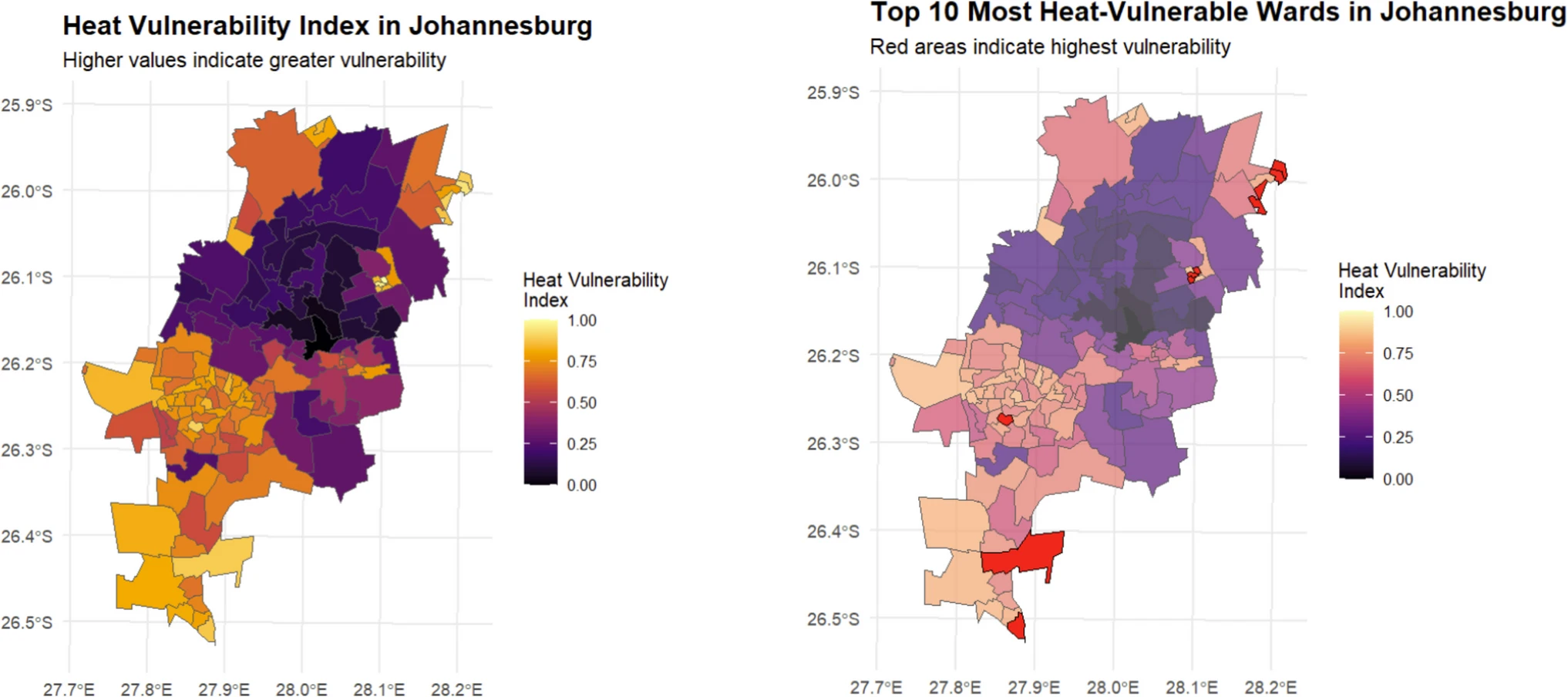
This study quantified heat vulnerability across 135 wards in Johannesburg by integrating high-resolution environmental data with socio-economic and health metrics, identifying areas at greatest risk.
This study examined heat vulnerability across 135 wards in Johannesburg by combining high-resolution environmental information with socio-economic and health measurements. The analysis revealed distinct patterns of vulnerability shaped by historical urban development, limited access to healthcare, and unequal socio-economic conditions.
Key findings indicate that environmental exposure, health status, and socio-economic conditions each played roles in determining urban heat vulnerability. The research identified that the highest-risk areas concentrated in historically disadvantaged communities. The work establishes an evidence-based framework for prioritising heat-resilience interventions in rapidly urbanising cities.
Read the full paper →