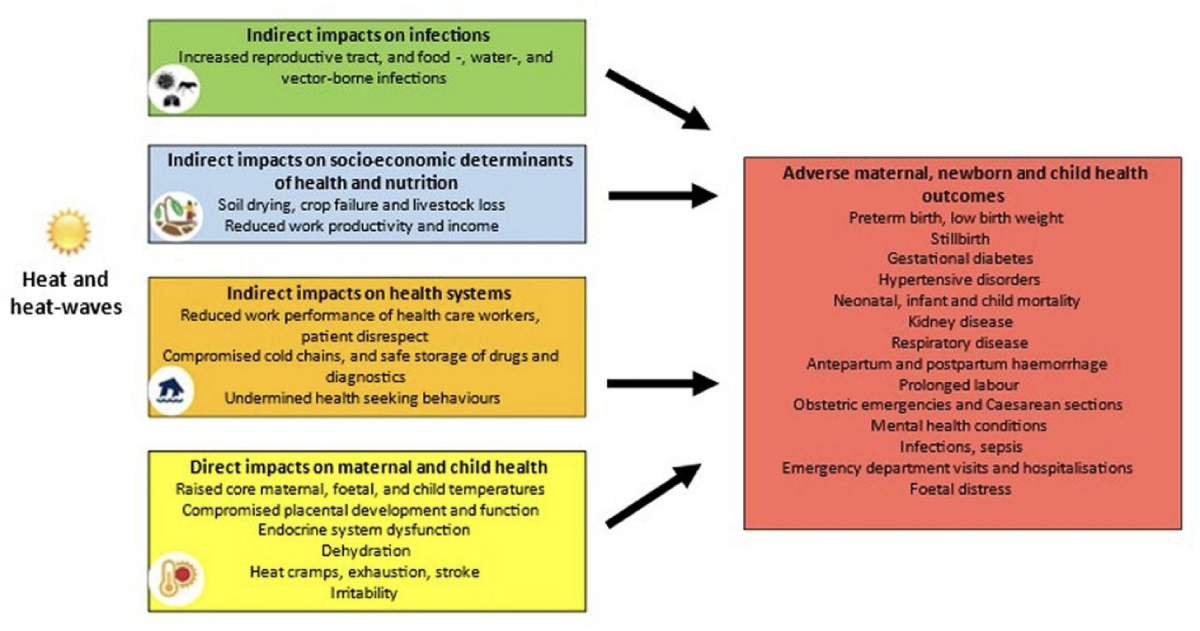
Researching how heat exposure affects maternal and child health in sub-Saharan Africa is critical as global temperatures continue to rise. This study draws on data from multiple longitudinal trials and cohort studies to investigate the link between heat exposure and adverse health outcomes during pregnancy and early childhood.
Researching how heat exposure affects maternal and child health in sub-Saharan Africa is critical as global temperatures continue to rise, posing increasing health risks to these vulnerable populationsGroups of people who may be more affected by health risks, extreme weather, or other challenges because they need extra support.. This study has drawn on data from multiple longitudinal trials and cohort studies to investigate the link between heat exposure and adverse health outcomes during pregnancy and early childhood.
Through collaboration with data providers and the use of satellite imagery, weather stations, and climate reanalysis data, the environmental exposures these groups face have been quantified. The findings aim to provide essential insights into how heat impacts health outcomes, guiding efforts to develop targeted interventions and inform policy in regions most affected by climate change.
Read the full protocol →